

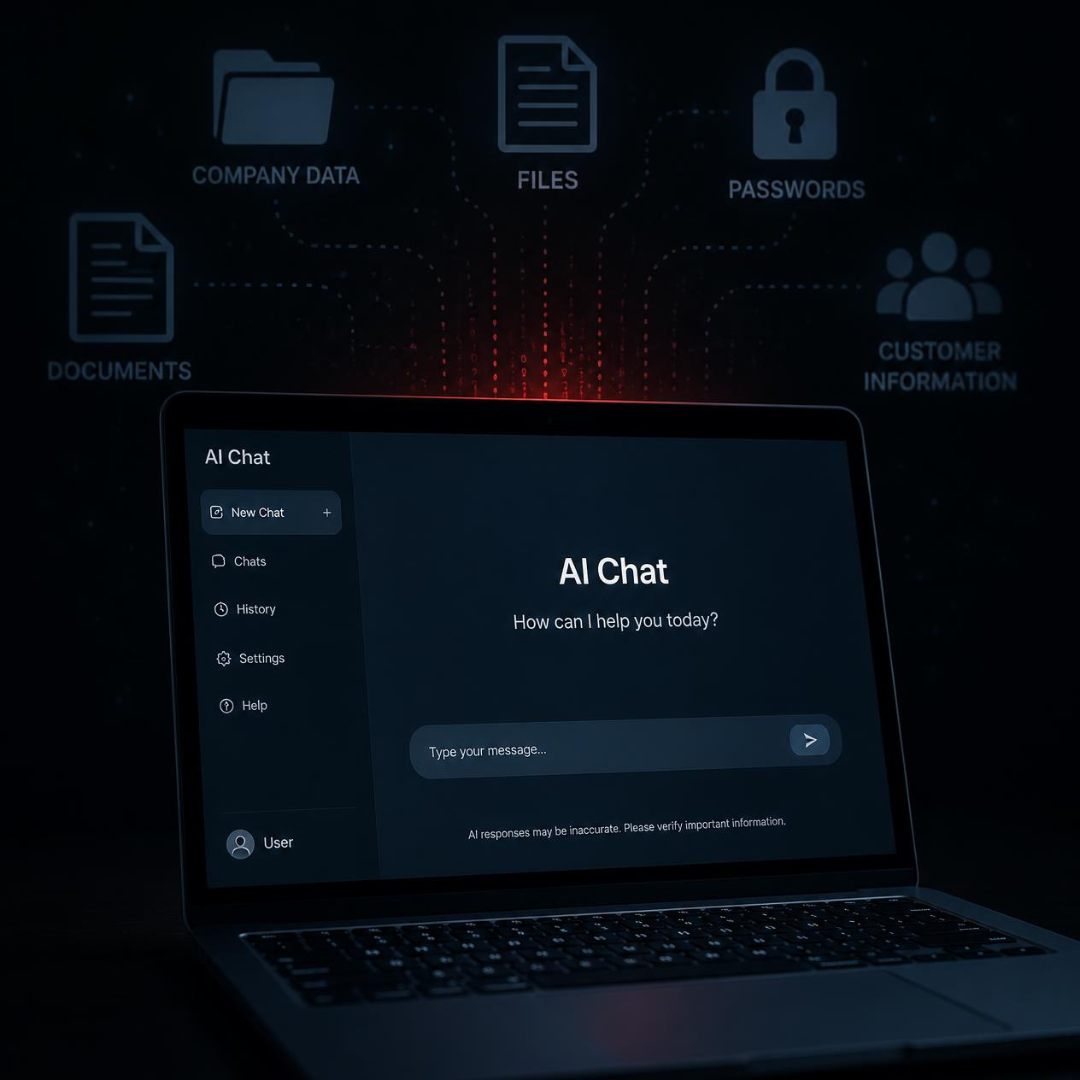
Artificial intelligence is quickly becoming part of the everyday workday. Employees are using tools like ChatGPT, Claude, Gemini, and other AI platforms to write emails, summarize documents, research information, analyze data, and automate routine tasks.
For businesses, that can be a good thing. AI can help teams save time, improve productivity, and accomplish more. But as AI becomes easier to access, a new challenge is emerging: employees may start using AI tools without knowing whether they’re approved, secure, or appropriate for business information.
That’s where Shadow AI comes in.
The experts at Varay Managed IT help businesses navigate new technology while keeping security and compliance in focus. So, let’s take a closer look at what Shadow AI is, the risks it can create, and what businesses can do to support safer AI adoption.
What is Shadow AI?
Shadow AI is the use of artificial intelligence tools within a business without formal approval or oversight.
It can happen in simple, everyday ways such as an employee signing up for ChatGPT to help write a report, a marketing team using an AI image generator for a campaign, or someone uploading a spreadsheet to an AI tool to analyze the data. In many cases, the employee is simply looking for a faster or easier way to get the job done.
Where it can go wrong is that employees may not know which tools are approved, what information is safe to share, or what security protections are in place. Without clear guidelines, a well-intentioned shortcut can quickly turn into a security or compliance risk.
Why ChatGPT, Claude, Gemini, and Other AI Tools Increase Company Risk Factors
AI platforms can be incredibly useful, but not all are designed with business use in mind.
Consumer AI accounts may lack the administrative controls, security protections, and compliance features organizations need to manage AI responsibly. They may also give IT teams limited visibility into how the platform is being used or what protections are in place for business information.
For businesses, choosing an AI platform should involve more than looking at its features. Organizations should consider how the platform handles data, what security controls it offers, how users and permissions are managed, and whether it supports the business’s compliance requirements.
The right AI solution isn’t necessarily the most popular one. It’s the one that gives employees functionality while giving the organization security, visibility, and control.
Why Data Leakage is One of the Biggest AI Concerns
One of the biggest risks of Shadow AI is accidental data leakage.
Employees may not realize that something they paste into an AI assistant contains sensitive information. A customer document, financial report, internal process, or proprietary file could include information that should never be shared with an external platform.
For example, an employee might upload a customer document to an AI tool to create a quick summary. While they may have simply wanted to save time, if the organization has not approved the platform, the business may lose visibility into how that information is being processed or stored.
This is where AI governance becomes important. Businesses need a clear understanding of what data can be used with AI, which tools employees can access, and what security controls should be in place.
You Cannot Manage Shadow AI Without AI Policies
Technology alone cannot solve Shadow AI.
Businesses need guidelines for how AI should be used across the organization. An effective IT policy should identify approved AI platforms, define which information employees may share, and clarify whether personal AI accounts may be used for company work.
Policies should also outline who can approve new AI tools, what steps employees should take if sensitive information is accidentally shared, and when AI usage guidelines should be reviewed.
Without clear expectations, AI use can vary from one employee or department to another, creating unnecessary security and compliance gaps. A well-defined policy gives employees a clear framework for using AI while helping the organization maintain better control over its technology and data.
Protect Your Business From Shadow AI.
Talk with Varay Managed IT today.
Why HR and IT Need to Work Together

AI governance isn’t solely an IT issue.
Human Resources should help establish expectations around acceptable AI use, employee responsibilities, confidentiality, and company policies. IT can then support those policies with the right technology and security controls.
This combination creates accountability. Policies tell employees what’s expected, training explains why those expectations matter, and technology helps enforce and monitor them. Together, these pieces create a stronger, more practical approach to managing AI across the organization.
How Technology Can Help Create Safer AI Adoption
The answer to Shadow AI isn’t necessarily to block every AI platform.
Employees use AI because it provides real value. Instead of trying to eliminate that usage, businesses can provide secure, approved tools that support productivity while helping protect company information.
AI and automation solutions can help organizations identify where AI can provide value and determine which solutions make sense for their environment. Depending on the organization’s needs, this may include managed AI accounts, user access controls, data protection tools, security monitoring, and vendor assessments.
For businesses already using Microsoft 365, solutions within the Microsoft environment can also create opportunities to introduce AI while maintaining greater control over company data. This gives employees a clear, secure alternative to turning to whatever AI tool they find on their own.
Start with an AI Governance Assessment
Before businesses can manage Shadow AI, they need to understand what’s already happening inside their business. An AI governance assessment can help organizations evaluate their current AI environment and identify potential gaps.
This may include reviewing:
- Which AI tools employees are currently using
- What types of data are being entered into those tools
- Which accounts and platforms are company-approved
- Current AI policies and procedures
- Security and compliance requirements
- Employee training and awareness
- Available monitoring and security tools
Understanding how AI is already being used across the organization gives leadership and IT a clearer picture of where additional guidance, security, or oversight may be needed.
Training is One of Your Best Security Tools
Even the best policies and technology cannot eliminate every risk. Employees still make day-to-day decisions about how and where they use AI, which makes training an important part of a secure AI strategy.
Employees should understand what Shadow AI is, why it creates risk, and how to recognize information that should not be entered into an AI platform. They should also know which tools are approved and what to do when they’re unsure whether a particular use of AI is appropriate.
The purpose of training isn’t to turn employees into AI security experts, but to equip them with enough knowledge to recognize potential risks and make informed decisions. When employees understand the reasoning behind your AI policies, they’re better equipped to use AI responsibly. That turns AI security from something managed solely by IT into a shared responsibility across the organization.
AI Adoption Should Be Intentional
Since AI is here to stay, organizations should take a more intentional approach to its introduction and use.
That starts with understanding which AI tools are being used, establishing clear policies, protecting sensitive information, training employees, and using technology to support security and oversight.
Shadow AI becomes easier to manage when businesses have four key pieces in place:
- Policies that establish clear expectations
- Accountability that defines who is responsible for AI governance
- Tools that provide security and visibility
- Training that helps employees make informed decisions
Together, these pieces give employees the tools they need to responsibly use AI while helping the organization maintain appropriate control over its data.
Varay Helps Businesses Adopt AI More Securely
While AI can make businesses more productive, productivity should not come at the expense of security.
Varay Managed IT helps organizations evaluate their technology, strengthen security, and develop strategies for adopting new tools responsibly. From managed compliance services to Microsoft 365 solutions and AI strategy, our team helps businesses build the policies, technology, and processes they need to use AI with confidence.