


AI tools have made custom app development more accessible than ever.
Today, users without formal development experience can use platforms like Claude or ChatGPT to generate code in minutes, creating dashboards, automations, reporting tools, and internal applications for their businesses. While this accessibility is powerful, it also introduces new risks.
At Varay Managed IT, we’re seeing businesses build new solutions with AI tools to address immediate operational needs or automate internal processes. Many of these AI-built applications function well, but assessing whether they are secure, scalable, and suitable for long-term use is where challenges arise.
Just because an application can be built quickly doesn’t mean it’s ready for production.
AI Has Lowered the Barrier to App Development
For years, building business applications required experienced developers, infrastructure planning, testing environments, and significant time investment. Now, AI can generate code almost instantly.
This has lowered the barrier to creating applications and accelerated experimentation across organizations. Employees are creating tools to automate reporting, summarize data, manage workflows, organize documents, streamline communication, connect systems, and build internal dashboards.
In many ways, this is a positive development. Businesses can move faster, experiment more freely, and solve operational bottlenecks without waiting months for traditional development cycles.
But there is an important distinction businesses need to understand: a proof of concept is not the same as a production-ready application.
Just Because You Can Build It Does Not Mean You Should Deploy It
This is where businesses often run into problems. An employee builds a useful AI-generated application on their desktop. It solves a problem immediately, leadership sees value, and suddenly, there is pressure to roll it out company-wide.
But very little thought has gone into questions like:
- Is the application secure?
- Where is the data stored?
- Who has access?
- Is the code vulnerable?
- How is the app backed up?
- What happens if it breaks?
- Can it scale beyond a few users?
- Does it meet compliance requirements?
- Who maintains it long term?
While AI tools are making development easier, they are not automatically managing security, infrastructure, scalability, or lifecycle support for you. Those responsibilities still exist; they just become easier to overlook.
Security Risks are Becoming a Major Concern
One of the biggest issues businesses face right now is accidental exposure. Employees are deploying AI-generated applications to public servers, connecting unsecured APIs, or launching tools without understanding the security implications. This creates risks around data exposure, weak authentication, unsecured environments, vulnerable code, compliance failures, and unauthorized access.
Many AI-built apps function correctly while still containing serious security gaps beneath the surface. AI can generate code, but it does not replace IT governance, cybersecurity expertise, or secure deployment practices.
These applications still require security reviews, access controls, patch management, monitoring, updates, backups, and compliance oversight. Without those safeguards, a useful tool can quickly become a liability.
Don’t Launch AI Without a Readiness Check
Schedule your free discovery call with Varay Managed IT
Scaling an AI App is Different Than Building One
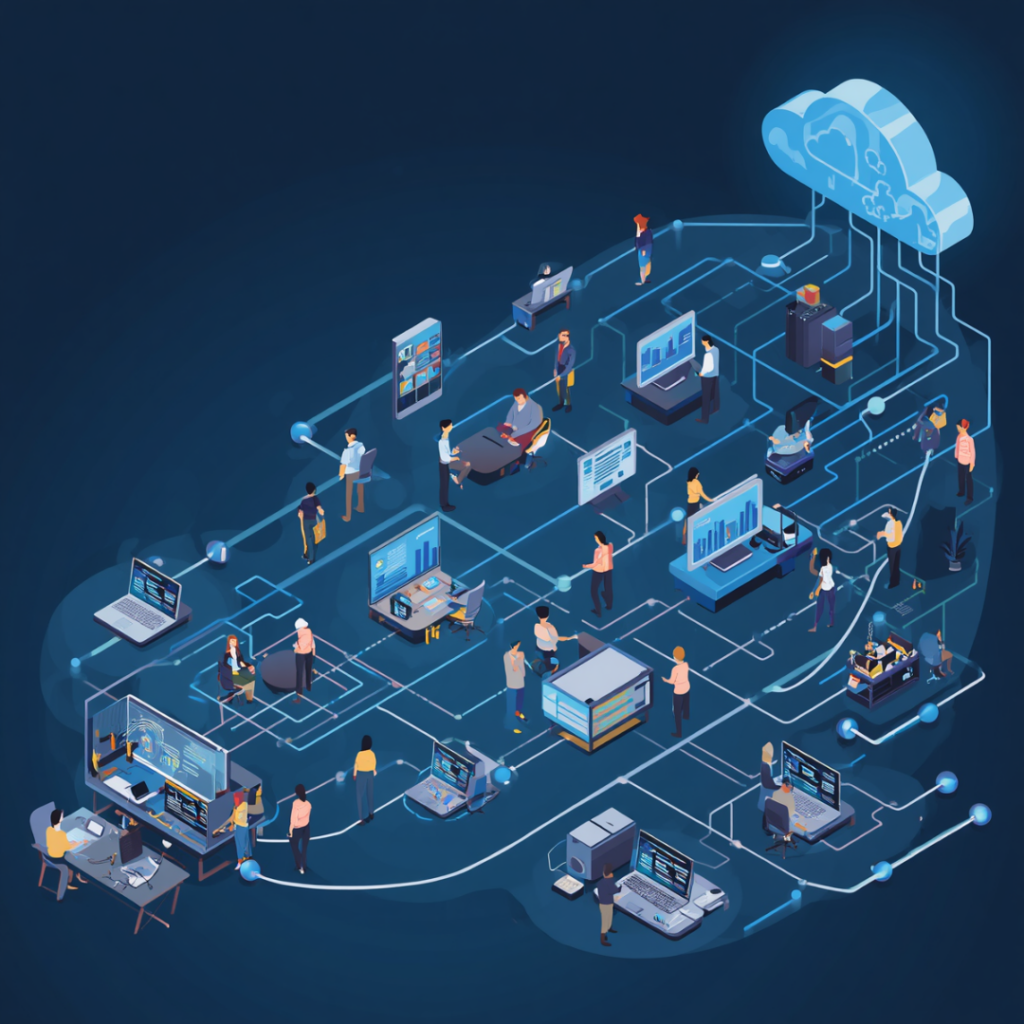
This is another area businesses often underestimate. An AI-generated app may work perfectly for one employee or a small internal team. But scaling that same application across an organization introduces entirely different requirements.
Once multiple users begin relying on an application, the conversation shifts from building features to supporting performance, security, user access, data management, disaster recovery planning, and long-term operational stability.
What starts as a lightweight internal project can quickly become business-critical infrastructure. And many AI-generated applications are not originally built with scalability in mind.
In practice, many AI-created tools function best as rapid prototypes or proof-of-concept environments. They demonstrate what is possible, but they often require additional development and planning before becoming operationally reliable.
Hosting Matters More Than Most Businesses Realize
Once a business decides an AI-generated application is valuable, the next step is to consider where it should live. Many businesses are unfamiliar with the infrastructure required to host applications securely and reliably.
Options like Microsoft Azure, Amazon Web Services (AWS), and Google Cloud offer powerful cloud-hosting environments, but they also require proper configuration, security controls, monitoring, and maintenance. Cloud hosting is not as simple as uploading an app online.
Businesses must also evaluate:
- Data encryption
- Geographic hosting regions
- Compliance requirements
- Backup systems
- Network security
- Access management
- Uptime monitoring
- Disaster recovery
For example, geolocation matters significantly in some industries because regulations may dictate where sensitive data can physically reside. Without proper planning, businesses can unknowingly expose themselves to operational and compliance risks.
AI Development Still Requires Lifecycle Management
One of the biggest misconceptions around AI-generated applications is that once the app works, the project is finished. The reality is that deployment is only the beginning. Every application requires ongoing support throughout its lifecycle.
That includes:
- Security patching
- Feature updates
- User support
- Performance monitoring
- Infrastructure maintenance
- Backup verification
- Compatibility testing
- Access reviews
Business needs also evolve. Over time, employees will request new functionality, systems will change, and software integrations will shift. An app that solved a problem today may require significant updates six months from now. Without ownership and maintenance planning, businesses risk creating unsupported tools that slowly become unstable or insecure.
AI is Accelerating Innovation, But Planning Still Matters
There is real freedom in building custom solutions quickly. Businesses can now solve operational problems faster than ever before. Teams can test ideas rapidly, automate repetitive work, and create tools tailored to their workflows without massive development timelines.
While that is a major shift, it can also create blind spots. AI lowers the barrier to development; it does not eliminate the need for strategy, governance, infrastructure, or security.
Building applications quickly is only part of the equation. Sustainable implementation requires operational planning and oversight. That means understanding how applications are built to support security, scalability, maintenance, ongoing support, hosting environments, and compliance requirements. Those decisions matter just as much as the application itself from a business perspective.
An IT Partner Helps Turn AI Projects Into Sustainable Business Tools
Many SMBs are now entering a stage where AI experimentation is becoming an operational reality. That is where experienced IT guidance becomes critical.
An IT partner can help businesses:
- Evaluate AI-generated applications
- Review security risks
- Configure cloud-hosting environments
- Implement backups and disaster recovery
- Establish governance policies
- Improve scalability
- Monitor ongoing performance
- Support long-term maintenance
Innovation creates value when sustainable implementation practices support it.
The Need for Planning in Sustainable AI Infrastructure
AI-generated development is changing how businesses operate, innovate, and solve problems, creating real opportunities for growth and efficiency. But businesses should not mistake speed for readiness.
A working app is not automatically secure, and a useful prototype is not automatically scalable infrastructure. AI-generated code still requires thoughtful oversight before becoming part of a production environment.
At Varay Managed IT, we help businesses move beyond experimentation and build AI-supported systems that are secure, maintainable, and aligned with long-term operational goals.